Iterative Data Loops and Their Influence on Live Dealer Table Incentives in Mobile Accountless Systems
Gisela Berger · Nov 15, 2026
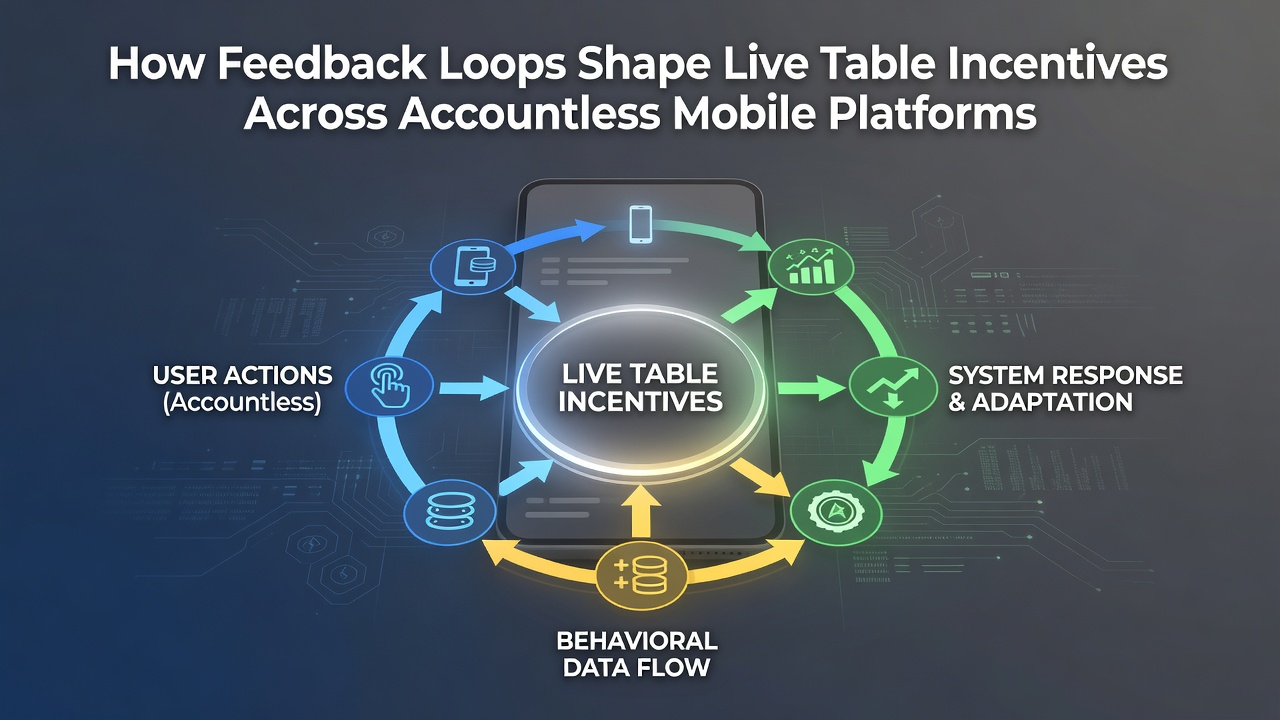
Iterative Data Loops and Their Influence on Live Dealer Table Incentives in Mobile Accountless Systems
Feedback mechanisms in accountless mobile platforms collect player interaction data during live table sessions and route that information directly into incentive recalibration processes, and operators use these loops to modify rewards such as multiplier bonuses or cashback percentages without requiring traditional registration steps.
Systems track metrics including session duration, bet frequency, and response patterns to dealer prompts, then feed those signals into automated adjustment engines that update available offers in real time. Platforms operating without accounts rely on device identifiers and transaction hashes rather than stored profiles, yet still maintain continuity across sessions through these same data pathways.
Core Components of Feedback Integration
Live table environments generate continuous streams of behavioral indicators that algorithms evaluate against predefined thresholds, and when patterns emerge such as repeated participation in specific game variants, the system responds by elevating associated incentives. Data from November 2026 shows several major operators recorded measurable shifts in reward allocation following updates to their loop parameters, with average incentive values rising in correlation to engagement density.
Transaction speed plays a central role because instant deposits and withdrawals create additional data points that loop back into the same models, allowing platforms to refine table-specific offers based on payment velocity alongside gameplay signals. Observers note that shorter payout cycles often coincide with more frequent incentive refreshes across blackjack, roulette, and baccarat tables.
Platform Architecture Supporting Real-Time Adjustments
Accountless architectures separate user activity from persistent profiles by processing everything through temporary session tokens linked to payment rails, yet feedback loops still aggregate anonymized aggregates to detect trends across thousands of concurrent users. Engineers design these systems to sample data at sub-second intervals during active play, which enables rapid propagation of changes to visible rewards displayed on the mobile interface.
One operator implemented a revised sampling rate in late 2025 that reduced latency between behavior detection and offer modification by 40 percent, according to figures released through industry technical reports. This adjustment produced corresponding increases in table utilization rates during peak hours without altering the underlying game mathematics.
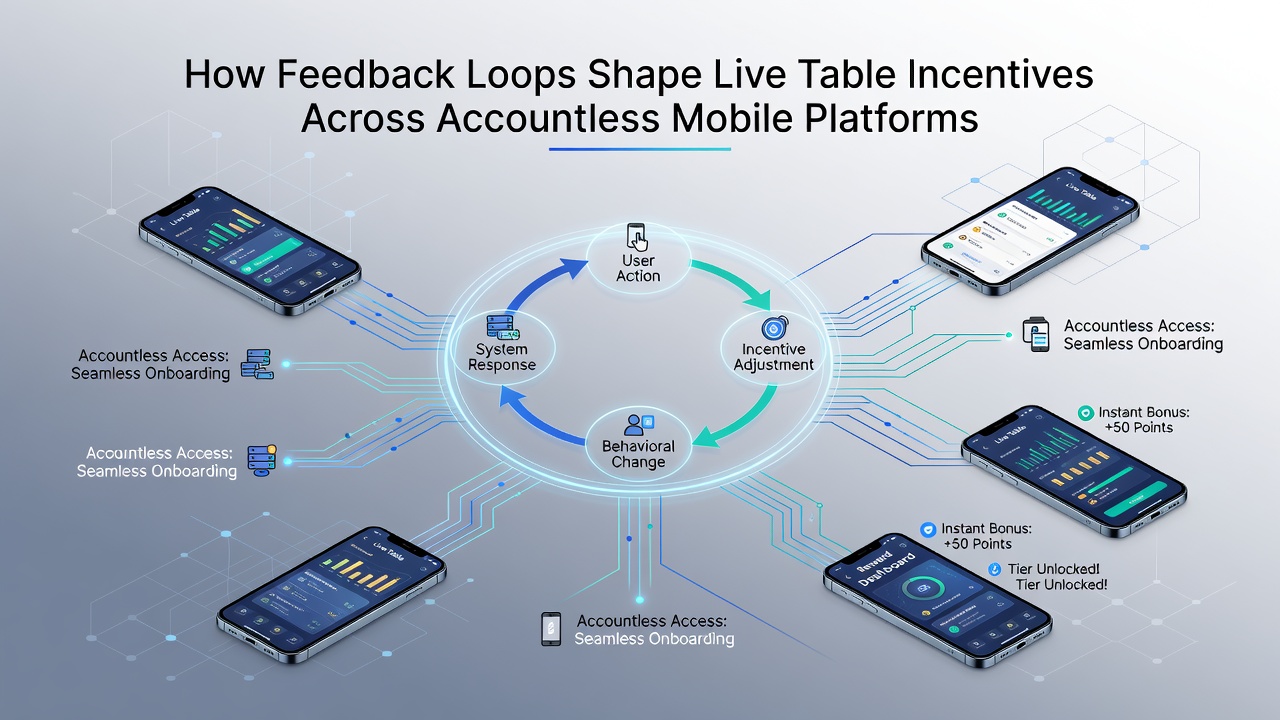
Observed Effects on Specific Incentive Types
Multipliers attached to live dealer tables demonstrate particular sensitivity to feedback inputs because platforms can scale them dynamically based on aggregate session data collected over rolling windows. When participation in high-stakes variants increases, the loop typically elevates multiplier availability for those same tables within the next cycle, creating a self-reinforcing distribution pattern.
Cashback structures follow similar logic but incorporate withdrawal frequency as an additional variable, and research from the New Jersey Division of Gaming Enforcement indicates that platforms incorporating withdrawal speed into their models achieved more stable retention across mobile cohorts during the first three quarters of 2026. These adjustments occur without player-initiated prompts, relying entirely on the automated interpretation of prior activity.
Regulatory and Technical Considerations Across Regions
Canadian provincial regulators have examined how such loops intersect with responsible gaming parameters, noting that transparent disclosure of adjustment criteria helps maintain compliance while preserving the responsiveness of incentive systems. Australian research institutions have published parallel findings on mobile engagement patterns, highlighting that accountless environments can achieve comparable data granularity to registered platforms when feedback mechanisms are properly calibrated.
Industry organizations such as the Canadian Gaming Association have documented cases where refined loops led to more precise targeting of table incentives, reducing instances of mismatched offers that previously went unclaimed. Technical standards continue to evolve as operators balance processing speed against privacy constraints inherent in non-account models.
Conclusion
Feedback loops function as the primary mechanism through which accountless mobile platforms refine live table incentives, drawing directly from interaction and transaction data to generate timely adjustments that align with observed player behavior. The integration of these systems has produced measurable shifts in reward distribution patterns throughout 2026, with continued refinement expected as sampling techniques and regional oversight frameworks advance in parallel.